• About
  • Contact
  • Disclaimer
  • Categories
    • Fashion & Beauty
    • Lifestyle
    • Bookshelf
Fashioned by Pluche. Powered by Blogger.
Instagram Bloglovin Tumblr Twitter Pinterest Youtube

Fashioned by Pluche

This picture shows a corner of Bas Kosters' studio in Amsterdam. There are some industrial sewing machines, one of which has an unfinished quilt underneath it. There are plants on the windowsill.

Crafts Council Nederland (CCNL) organised a Meet-the-Masterclass with Bas Kosters, and I was there! I was invited to tag along because of my interest in craftivism and alternative knowledge production. CCNL is a Dutch platform that protects, preserves and shares knowledge of craft-practices that otherwise would be 'made forgotten' because it does not 'serve' our neoliberal 'knowledge-based' society. More about that soon... ;) Through organising workshops such as Meet-the-Masterclass, CCNL tries to keep craft exchange alive. This is important because crafts, if done right, combines traditional knowledge and practices with alternative imaginings. This helps to innovate current unsustainable and exhaustive practices that are harmful to the world on an environmental, social and cultural level.

Bas Kosters' work ticks all of the boxes above. Bas Kosters is a Dutch multi-disciplined artist, best known for his 'provocative' fashion designs (surrealist comedian and The Great British Bake Off host Noel Fielding is a fan). He uses his work to address social issues while creating a new vision of how the world could or should be. He often upcycles vintage fabrics, which is not only environmental friendly but also provides his designs with an extra meaningful and tangible layer. During this workshop Kosters guided us making quilts and gave us an exclusive behind the scenes of his creative process.

This picture shows a close-up of a shelf in Bas Kosters' studio. On it stands two small head-shaped pieces decorated with different sized and shaped sequins.

Cloth & clutter: The best way to start a Sunday morning

"It doesn't matter what you do, but how you do it", Bas Kosters says while casually browsing through his portfolio. "It's good to do something fun, but it's better to do something that's also meaningful." I, together with twelve other crafters, stare at him with awe. We're sitting in Kosters' studio located on the 13th floor of the World Fashion Centre, providing a nice view of the outskirts of Amsterdam (which mainly consists out of hotels, office buildings and the highway). It's Sunday morning and we're all there to learn from the master.

As we're sipping tea from different sized and coloured mugs, we get the opportunity to scan our environment. Kosters' studio is, as you would expect, whimsical yet orderly. On the one side you have industrial sewing machines surrounded by clothing racks with pieces from his Dear Sir/Madam: HOPE collection. On the other side you have a cleared-out working space with different boxes, bags and piles of scrap material; old blouses, skirts with holes in them and other pieces of cloth and clutter collected by Kosters or 'donated' by his neighbours, knowing Kosters will find a way to keep them out of the bin. In the middle section, where we are sitting, there's a small kitchen, a long table with mismatched chairs and an official looking office area surrounded by books, photographs and drawings. There's no one there except for us. "It's funny how people think we [Bas Kosters Studio] are constantly producing new things or that I run a whole factory, but in reality it's mostly just me answering emails."

Kosters, who started the day with coffee from his famous penis print mug (the first one, gifted to him by a friend, now a beloved item in his webshop), holds different pieces of paper in the air. "I really should get a better portfolio", he adds with a smile while, finally, holding up the piece he wanted to show us: a picture of one of his first hand stitched tapestries. Nowadays Kosters leaves all the sewing-work to his interns, but this piece he stitched himself, "which makes it extra special to me."

This picture shows a piece of paper that was taped to a cabinet in Bas Kosters' studio. On the one side it has a row of words in English, French and Dutch (example: cabinet, armoire, kast), on the top right corner it says: "hungry + angry = hangry".
This picture shows a close-up of one of the quilts Bas Kosters Studio is still working on with the original drawings besides it. It depicts a face in red, pink, black, yellow and blue, with some words next to it ("sadness").
This picture shows a drawing or sketch for one of Bas Kosters' tapestries, which he made in 2018. It depicts a black human-like figure, with the words "come to my love", "all the love", "2018" surrounding it, and other expressions that are obsured by another piece of paper.

Get crafty, start with yourself!

After everyone introduced themselves and why they chose to join this Masterclass (mainly to catch a whiff of Kosters' creative mind), we are given a short studio-tour with the invite to roam around and explore more in between stitching. The tour ends at our desk for the coming six or so hours. After Kosters hands out some sheets of paper and pencils, we are set loose. Let the creative juices flow!

We were asked to come prepared with an idea or design. I hadn't been able to prepare and had absolutely no idea what to do. I decided, instead of starting with freestyle drawing, to rummage through the boxes, bags and piles set-out for us. I wasn't the only one who went straight for the good stuff and with a small group we eagerly grabbed whatever came to hand. Different pieces of fabric were tossed around, combined, put back and picked up again. Still without a clue, I dragged a long piece of black velvet to my seat and started to snip, trim and sew some strips together (Kosters recommends sewing three or four layers of fabric together to get a sturdy background you can work on). "Sometimes it's good to just begin", I softly mumble to myself while glancing at my neighbour who's completely emerged in her work.

As if Kosters read my mind, he came over to me and in a friendly tone asked "what are you making?". "I've got absolutely no idea what I'm doing or where I'm going", I confessed. He looked at me and nodded. He then grabbed a sheet of paper, wrote his name on it and drew a circle around it. "Sometimes the best place to start is with yourself." "Based on what everyone told me, I can see a clear connection between that what they shared and that what they are making. For instance, you choosing black velvet and you telling about your study [Gender Studies], it's an obvious choice", he says with a smile. He explains how a mindmap can help to narrow things down, give you a direction and help you construct a meaningul story while still working intuitively. Next to his name he wrote down the words 'fluidity' (inspired by my study), 'hope', 'tears' and 'self love'. After Kosters left me to think, I wrote down my name on the other side of the paper. Next to it I wrote 'relational', 'rhyzomatic', 'intersectional' and 'hollistic' (I was probably thinking about an essay I still had to write). From this I tried to envision how I could translate these words onto fabric without literally cutting words out of fabric (this was inspired by an article by Karen Barad on posthumanist performativity -instead of representationalism- and affect theory, told you I was thinking about my essay!).

This picture shows another corner of Bas Kosters' studio. It has boxes stacked with 'fragile' tape over it. On the wall hangs a blue tapestry with a brown human-like figure on it, wearing a white t-shirt that states in black 'artist'.

Unfortunately I was unable to finish my quilt, but I'm determined to go through with it! Just being in the same room as Bas Kosters and hearing him talk about his creative process is so inspiring. I can't wait to incorporate a slice of his wisdom into my own practices. Masterclasses are a great way to foster and share knowledge. Not only by hanging onto every word a master says or practice they show, but also through conversations with your fellow crafters. You'll be amazed how much knowledge circles in/between bodies!

Do you want to see more of Bas Kosters' work? From 12 February untill the 31st of March Museum Rijswijk presents Wolzak & Kosters: Serious International Business, a collaborative exhibition between Kosters and Petra Wolzak. The exhibition features a new tapestry-series called Quest For Self-love, which explores the importance of appreciating yourself in a time when everyone is looking for validation from outside. And naturally check out CCNL if you're interested attending a Meet-the-Masterclass yourself!


Love me do? Follow Fashioned by Pluche on Instagram | Twitter | Facebook too!


This picture shows a close-up of a yet to be finished quilt of a face, made by Bas Kosters. It has two white borders at the top and bottom. On it says: "Quilting w/ Bas" and "www.fashionedbypluche.blogspot.com".


Share
Tweet
Pin
Share
2 comments
The picture shows old clothing hangers on a green background (duvet).

"Out with the old!" you shout while gleefully shovelling your dreary old wardrobe into a garbage bag, throwing it over the neighbours' fence and strutting off to the shops to fall in love with the newest pearls and gems. I get ya! Unfortunately so do many more who, with similar glee, dump about 235 million kilograms of clothing a year to make way for the latest season (and that's only the estimated number from tiny-winy Dutch wardrobes). Now I'm not saying you should anxiously hold on to every scrap material, but it wouldn't hurt being a bit more mindful before chucking everything out, buying everything new and repeat. So instead of waltzing into H&M, Zara or Primark, can I persuade you to sashay away into the wondrous world of already worn, danced in, slept in and died in clothes...

Benefits of second hand shopping

Ok. Yes there is a chance you end up wearing grandma's beloved coat. But with second hand shopping you win some, you loose some. You win a more environmental friendly coat, you lose... grandma. Or your instinctive disgust towards clothing that has touched the skin of total strangers. Instead you see opportunities: 'that coat wold look so cute with that skirt!' This transition from YUCK to LUCK takes some charity shopping experience and a strong will to shake off any thoughts starring the possible previous owner and all the weird sh*t they got up to. Repeat to self: not everyone lives in a damp basement collecting toenails, picking their nose and killing unsuspecting squirrels. Still there's an element of surprise to second hand shopping that an overly thought-out H&M catalogue just can't peer with. That one-in-a-million chance of stumbling upon the creme de la creme: a well-tailored Dior suit. Probably fake, possibly real. And that for the shadow of its original price! #Ibelieveinmiracles Basically: popping into a charity shop instead of a Primark will help to reduce fashion-waste, makes you more creative with clothing and doesn't break the bank while hunting for new pieces to pimp your wardrobe with. And, last but not least, with your buys you support a good cause (instead of underpaid labour). Grandma would've been so proud!

The picture depicts several polaroid's casually spread out on pink paper. The pictures depict a white girl with dark hair wearing different kinds of dresses (a floral dress and a red dress). The most centered polaroid shows the girl wearing a red dress and holding up a bag.

5 tips to get you charity shop ready

Walking into a charity shop can be quite daunting. They often look, smell and feel a bit dingy. But this is part of the fun! After facing all the doom and gloom of awful 2000-clothing, of suspicious stains and 'I don't even want to know what that is', your killer fashion instinct will finally kick in and turn that dodgy mustard-coloured blouse into a 1970s inspired master piece! To help you in this process, here are 5 tips so you can flaunt affordable environmental friendly fashion instead of crying against a clothing rack stuck to the velcro of a gabbers bomber jacket...

1. Be patient, open-minded and good humoured

There won't be a Dior suit, Chanel bag or Gucci Tee waiting for you every time you walk into a charity shop. Mostly you'll be greeted with an indescribable smell and very bad taste. This can be overwhelming to the 'the only chaos I know is the discount table at Zara' shopper. This isn't Zara. We aren't simple strollers walking down a clear-cut selection, we are scavenger hunters scooping through an unreliable system of donations and discards. It takes time and a stubborn inner smile to find the creme de la creme in a pile of pudding.

2. Always go charity shopping with a friend or a reliable family member

Not only for the company, the extra set of eyes or to dare you to try on that awful looking leopard-print blouse. You also need someone there to pull you through all the gross moments you will encounter. As said, charity shops aren't the most clean-cut environments. Although employees do their utmost best to deposit lost dentures, discovering a used handkerchief hidden in the pockets of a green velvet trouser when you casually put your hands in there to strike a pose is happen-able. Trust me, it happened to me twice. #truestory #boogieman

3. Shop around different areas

Because charity shops are driven on donations, the area it's located in actually dominates what's in store. And, more importantly, what's not in store. Generally the rules go like this: 1) big cities have more diverse people living in them so more diverse stuff on offer 2) rich areas have 'nicer' things donated to them but this is often reflected in the price AND nowadays anyone with an internet connection knows how to make some big bugs on grandma's good vintage before donating the rest and 3) people, places and products can surprise you. Don't write off certain areas just because there's no luxurious retirement home around the corner!

4. Know what you're looking for (but also don't)

Charity shops can be overwhelming with their seemingly unendless heaps, racks and piles. By constantly repeating to yourself 'cute corduroy skirt' you tune yourself to look through the chaos that's in front of you and search for that cute corduroy skirt. However when the only thing on your mind is that cute corduroy skirt, you're going to miss those perfect panther pants. Once again: you can't predict what's in store so you have to work with the things on offer. And sometimes, ya know, you'll find nothing. And that's fine too.

5. Be mindful before purchasing

Last but not least a more general practical note that actually goes up for shopping wherever: to prevent you from garbage-bagging your finds before the start of the next season, it's important to not only like the style of something or look at the price tag. Before buying you should feel the fabric (is this something I'm comfortable with rubbing against my skin?), look for stains (am I really able to wash this out?) and think about how you're going to wear it with other pieces from your wardrobe (and no, pieces you don't actually own but dream about do not count). This way your newest finds actually make a difference!

Are you a regular charity shopper? What's your best find so far? Let me know in the comments below!


Love me do? Follow Fashioned by Pluche on Instagram | Twitter | Facebook too!


The picture shows old clothing hangers on a green background (duvet). The picture is framed with white borders on the top and bottom. On the top border it states "Are you thrift-ready?". On the bottom border it says "www.fashionedbypluche.blogspot.com".

Share
Tweet
Pin
Share
No comments

"Arms. Some got them, others want them. They come in all shapes and sizes. But these...", I hesitate and take a step forward, "...these are ridiculously small. No. Inhumanly small. There's no way someone could (voluntarily) squeeze their flesh through these tunnels." I'm standing, slightly leaned forward, in the Jan Taminiau Reflections exhibition at the Centraal Museum. In front of me hangs -what is meant to be- a sleeve perfectly still, attached to a dress embellished from head-to-toe in glass beads. It is not particularly only this dress with alien sleeves attached to it that's caught my eye. As I straighten my back and somewhat confusedly glance through the exhibition space, I can see a trend coming. Narrow sleeves, alienating narrow sleeves everywhere.

Although I've never particularly been a fan of my arms (they are arms, what do you want from them?), I suddenly become very aware of all the flesh I potentially have to push down through the minimal pieces of fabric that is the sleeve in front of me. A horror image appears in my head of seams bursting in slow-motion and glass beads, sewn on by some poor intern, in waves falling to the ground. Leaving us with an echoing sound of clatter and disappointment.


Miss Marple Mode

As I was attending the opening of the exhibition and irgendwie irgendwann irgendwo a wild Taminiau was walking around -I imagine proudly, slightly tipsy- looking over us mere human-armed peasants, I could've potentially asked the master himself why he again-and-again chooses these sleeves instead of normal un-narrow human-like sleeves. However we all know I'm not worthy enough to question the work of the master. So instead of bothering him with my doubts and fears, I decided to investigate this issue by myself. Weaponed with deductive skills picked up from watching every Agatha Christie adaption (except for the 2017 Murder On The Orient Express movie as I'm still bracing myself for that AWFUL moustache), I further ventured into the exhibition space trying to find the motive behind the narrow sleeve. #activateMissMarpleMode

Jan Taminiau -for those unfamiliar with these particular syllables- is a famous Dutch fashion designer best known for dressing the queen, but he has also dressed the likes such as Lady Gaga and Rihanna. This exhibition is meant as an overview and insiders look into Taminiau's work. Especially the different kinds and patterns of embroidery he develops in his lab is highlighted. The pieces on display are mainly (narrow-sleeved) dresses and, if I'm being frank, you basically see everything you need to know about his repertoire in the first room and this vision only gets repeated in different spheres, fabrics and glass beads in the rooms that follow. This is however not to say that the other rooms are unnecessary.


Whodunit?!

Although generally a whodunit plot is driven by finding out the who and why, I'm afraid the who is rather obvious and the why is some made-up excuse like 'because of aesthetics' or 'because it's my signature style'. Basically not that interesting. So instead I focused on the how: as we're dealing with a serial sleeve killer, I wondered if my worst fear -flesh seeping out of bursting seams- could come true. Now I was going to rob a mannequin of her dress and test-drive it right there and then, but the guard kept giving me funny looks and I chickened out. So I had to solidly rely on my observational skills. Just picture me creeping through the exhibition with an imaginary magnifying glass inspecting every sleeve while Can't Touch This by MC Hammer plays in the background.

One by one I inspected every sleeve that came my way once, twice and sometimes even three times until I found the one that possibly contains the answer to all my questions. "A concealed zipper!", I enthusiastically yell to no one in particularly (though I was once again treated with funny eyes from the guard). Unfortunately these are the only narrow sleeves I spotted with a concealed zipper to safely confine and keep the flesh in place. However on my way home I came up with three theories that might support the intrinsicality of the other sleeves: concealed concealed zippers, ALIENS (or models who have significantly thinner arms than me) and the plausible possibility that the other sleeves are sewn close when tried on by a model. As these type of clothing aren't worn on a day-to-day basis (it basically gets lucky when it touches the skin of a human being once in its lifetime), it could be that the narrow sleeves are made on measure when modelled. Sew me up Scotty!


You can see the exhibition Jan Taminiau Reflections at the Centraal Museum Utrecht until 26 August 2018. If you do visit, please check the sleeves and report back on your findings. We will crack this mystery and catch the serial sleeve killer together!


Love me do? Follow Fashioned by Pluche on Instagram | Twitter | Bloglovin too!

Share
Tweet
Pin
Share
4 comments

Last year Modemuze -the online platform for Dutch fashion and costume heritage- organised an exhibition at the OBA and this year we're back! In correspondence with the theme of the ICOM Costume meeting 2018, anything and everything that's got to do with fashion and innovation will be on display. Together with a fun packed programme of which a few events I'll be your (terrified) host. *immediately starts to panic sweat*

Last year as 'the intern' at both Modemuze and one of their fifteen partners, I had the privilege experiencing all the different stages of building the exhibition and subsequently knew all the in's and out's of what was on display (as I put it there myself). This time however I was kept in the dark. Although, admittedly, I was one of the first people to see the marvellous campaign image by Carin Verbruggen and Ferry Drenthem Soesman. But nothing more than that. So when the exhibition was officially opened last Thursday, I was in for a surprise.


Layers of innovation

The 21st century is self-consciously an age of change and innovation, led by the so-manieth Apple-whatever, Facebook-scandal and Twitter-rant. Innovation however isn't always electronic or left to digital nothingness programmed by angry teenagers. It can be as big as the Industrial Revolution and as small as a simple popper; changing how we go through life and more importantly what we wear when staring directly into our webcam asking the FBI-agent on the other side if they know when your cousins birthday is. Thanks Tom!

As you can imagine, the words 'innovation' and 'museum' aren't often paired together. And even though I believe that museums have come a long way since the late 18th/early 19th century and (re)innovated themselves as reflections of the present instead of the greatest misconeption ever representing the unchanged past, not everyone sees it this way. Just looking at the frowned faces of my fellow-students, dramatically sighing and rolling their eyes as I once again stutter the word 'museum' in whatever context, following their misbehaviour up with a proud exclaim of "I never go to a museum" as if it's a badge of honour that physically fights the patriarchy. Yes, museums are undeniably a space for conservative old white men with an expensive hobby, but perhaps that's why it's even more important to show up and actively demonstrate that their unchallenged reign is over and therewith open up all the unexplored notions of what a museum could be. ANYWAY...


Challenging change

Although museums are perceived as dusty ol' patriarchal practitioners, there are currently many amendments made to this idea. As the Modemuze@OBA exhibition showcases, there are multiple developments -how banal it sometimes may seem- that got us where we are now. And it's thanks to these kinds of displays that show us these unnoticed layers underneath our imposed normative mobile-phone-driven existence. Museums, with all the 'useless' and 'boring' stuff they've gathered, can show just that. Poking through the seemingly fixed idea of the past, the present and the future as the notion of innovation changes with time. Just think again about the brilliance of a popper and how underappreciated its innovativeness is compared to the newest Iphone. #justiceforpoppers

The exhibition is similarly build-up as last year. When entering the space you're greeted with the campaign image and a brief introduction of what to expect. Because the space is on the small side, there's unfortunately no room for rotating mannequins doing cartwheels, however there IS room for fifteen museums and four private collectors to show off pieces of their extensive collection that in some way is innovative. This can literally go from a wrestling mask to glow-in-the-dark thread and my personal favourite: a two-in-one costume of the caterpillar on the mushroom from the 1976 production of Alice in Wonderland. This costume is what nightmares are made of.


Modemuze@OBA: Innovation will be at the OBA (Oosterdokskade 143, the one next to Amsterdam Cental Station) until 2 September 2018. As said at the beginning of this post, within the exhibition space multiple events will be held. You can find the whole programme on Modemuze and Facebook. Let me know if I'll see you there!


Love me do? Follow Fashioned by Pluche on Instagram | Twitter | Bloglovin too!

Share
Tweet
Pin
Share
No comments

Skincare routine? More like *tumble weed* amiright?! Skincare routines, or so I thought, belonged to people who had their sh*t together. And thus, as someone who clearly had NOT her sh*t together, I waved every aspect of it away and left it for what I perceived it to be: just another scam to get me buy useless lotions and potions to display on my dresser and gather dust until it starts to 'smell funny'.

I decided that the bare necessities were good enough for my potato peel. You know, a bit of moisturiser here 'n' there when your skin starts to flake of your skull and using a random Lush face mask once every decade until you realise its waaaaaay past its expiration date and you cross your heart, hope NOT to die. Meanwhile I comforted myself with the thought that any day from now nature would kick in, do its thing and everyone would live happily ever after.

More damage than good

However slowly but steady I realised what I was doing -or rather: what I wasn't doing- did more damage than good. "WHY", I asked myself dramatically while examining my dry, flaky but also sometimes greasy, spot prone skin, "am I not blessed with a squeaky clean marble surface?". Till this day the answer stays unknown but, as it turns out, nature doesn't mind a lotion or potion or two (or more) to stimulate its miracles.

And so my quest for marble started. Naturally rubbing whatever onto your skin, crossing your fingers and hoping for the best doesn't cut it. There are so many other factors like what you eat, drink, how you sleep or stress about everything, that influences whether your skin resembles a rotting shrimp or a Greek statue. However besides the general advices of eating your greens, drinking enough water and practising mindfulness, there's still enough to be said about rubbing some mixture onto your skin and a few hail marys to proceed the process.


Lotions and potions

The past couple of weeks I ventured out into the world (wide web) and searched for products suitable for my sensitive, mixed but generally dry skin. And *touch wood* at the moment my skin indeed has cleared up tremendously using the products I've selected. So here goes nothing...

Morning routine

I wake up in the morning feeling like P. Diddy, splash my face with some water and hit 'the city' with The Body Shop's Aloe Soothing Day Cream. It's a light formulated moisturiser, suitable for vegans (v) and fragrance-, colour-, preservatives- and alcohol free. It's perfect to wear under your make-up as it's quickly taken up by the skin and doesn't leave it feeling greasy. And that's it! Only a bit of Lush's Ultrabalm (v) on the lips and 'problem areas' and the morning routine is in the bag; besides, you know, a quick grab and go make-up panic. And don't get me started on the desperate wardrobe dance...

Evening routine

I first clean my face with Ultrabland from Lush, the only cleanser I've tried so far that doesn't leave my skin feel like a trampled sand castle. Then I clumsily try to apply The Body Shop's Tea Tree Anti-Imperfections Daily Solution (v). It's advised to use it twice a day, but my skin ain't having it that frequently. I highly recommend it though to anyone who wants to deal with their blackheads, but will warn that it's thus a pain to apply and quite strong stuff (don't take a sniff straight from the bottle or you'll start hearing colours and seeing sounds).

To top it all off I use Lush's Celestial moisturiser (v). I've been using this moisturiser on and off since 2016. I love it but the formula is rather greasy and made my make-up melt before I even put it on, so I skipped it in the morning. Which made me skip it in the evening, which made me forget about it, which made me -eventually- flake to the bone. But we've made commends now and it works magic as a night cream.

Special additions

Besides these daily wonders I also use The Body Shop's Aloe Soothing Cream Mask twice a week. It literally works while you're asleep. Therefore it's a perfect match with all us busy/lazy people who like the idea of putting our feet in the air, cucumber slices on our eyelids, trying to not scratch our nose, but always find they're running out of time (watching the so-manieth Sebastian Stan and Anthony Mackie funny moments compilation on Youtube).

HAVING SAID THAT I took this moment of skincare-revelation to further experiment and try out a Lush mask hoping the Tea Tree fumes inspired some brain cells to get their act together. I went with the Mask of Magnaminty which, as the name suggests, is very minty. Its smell will prevent an upcoming cold and its substances will get rid of dead skin, spots and other unwanted blemishes. Highly recommend!


Compared to many other skincare routines, mine is a bit meagre. However this is no 'who can smear, rub and scrub the most' competition. And I think we can all agree that for someone who did next to nada, this already is a HUGE improvement. My skin looks so much more healthier and -dare I say it- happier. *looks into mirror and does finger guns*

Do you have a skincare routine? If yes: Which product do you mourn when you scoop up its last remainings and you're faced with the abyss of an empty container knowing it'll take at least a day before you can replace it? For me it must be Ultrabalm, that stuff is tha multifunctional bomb.


Love me do? Follow Fashioned by Pluche on Instagram | Twitter | Bloglovin too!
Share
Tweet
Pin
Share
2 comments

It's day three of 'I haven't written anything yet and it's already 22:35'. LET'S DO THIS!!!

Today I went to Amsterdam (again) to attend Fashion Fest 2017 at the Tropenmuseum. What's fashion fest? Good question. I hadn't heard of it either before Thursday (that was one of the things the meeting was about), but it's a fashion contest where designers, makeup artists and hair stylists compete against each other inspired by an object from the museum. And only one can be the winner... (Just to be clear: the designers don't compete with the makeup artists, but there are different groups consisting of design/makeup/hair who then compete with other groups).

"I've basically dealt with this kind of stuff for four years already and man why can't I ever get a break from stuffed tigers in a museum."

As said, I hadn't heard of it before and didn't really had any expectations. Because what must one expect from a fashion contest? When I was still studying Cultural Heritage we went to the Tropenmuseum -what felt like- daily so I knew what to expect there. Which is, for those who are unfamiliar with the Tropenmuseum, one of the largest museums in Amsterdam specialised in ethnography. Funnily enough I'm currently reading the chapter 'The Poetics and Politics of Exhibiting Other Cultures' in Representation by Stuart Hall (ed.) for uni and although I can't get through it because I've basically dealt with this kind of stuff for four years already and man why can't I ever get a break from stuffed tigers in a museum (yes, that's a shout out to Kenneth Hudson whose tiger logic (for those uninformed: a tiger in a museum is a tiger in a museum and not a tiger) hunted us Cultural Heritage students for four years, only to be surpassed mid year four by my brilliant teacher who said: "Don't throw with a stone, throw with a bird". Which became our 'inspiring' Facebook banner and uplifting mantra ever since. Because who knows what she meant by it but we all accepted her madness by then. Apparently we Cultural Heritage people just love our animals).


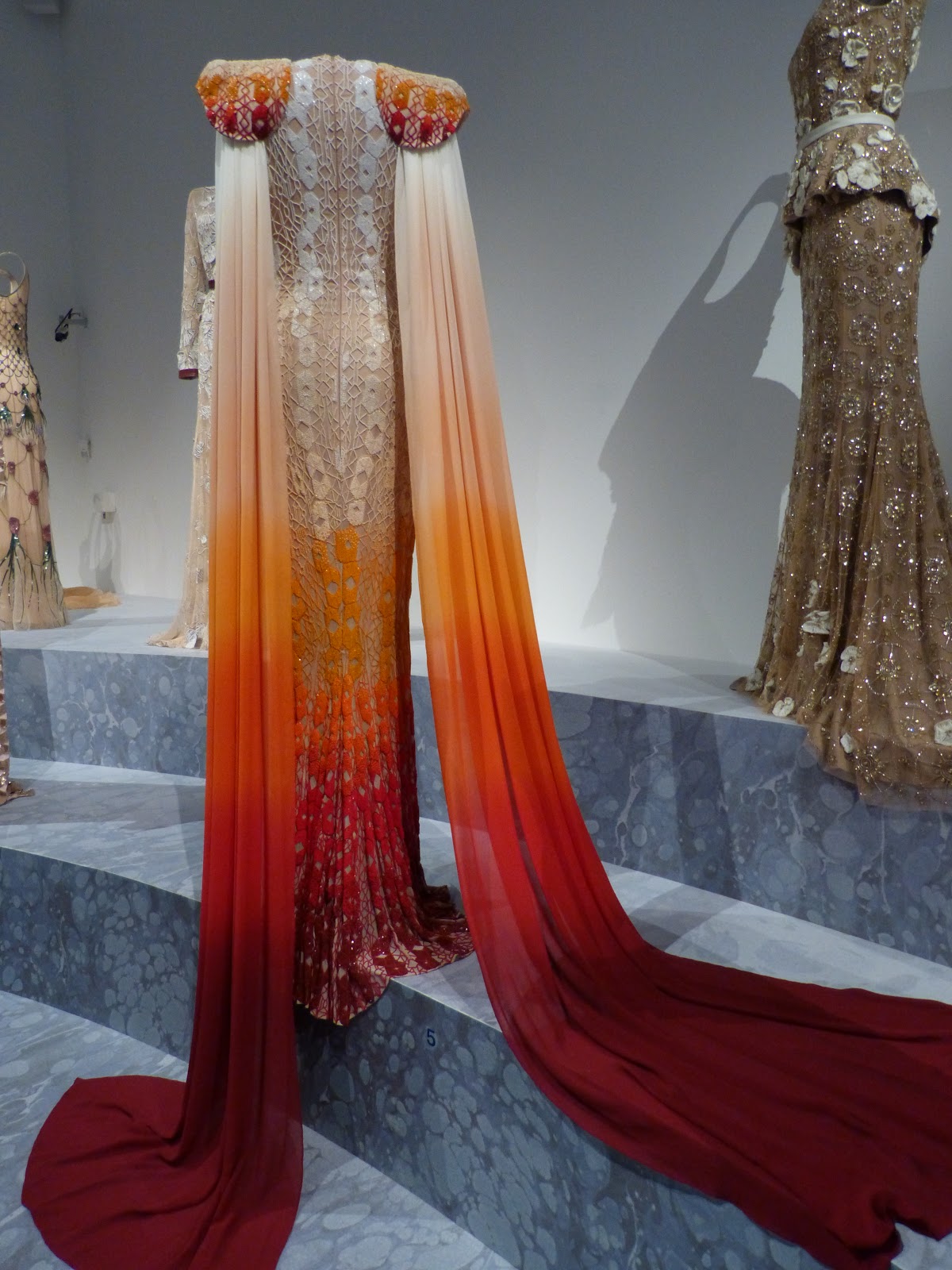
Part of the exhibition 'Fashion Cities Africa'

Right. Back to the chapter I'm reading for uni: it deals with how ethnographic museums use a specific representation system that neutralises the way we think about what they are actually telling us (i.e. that what in the first place is categorised as ethnographic and in the second place how that information is presented to us). Going Foucauldian, museums/ethnography operate in certain discourses whereby their 'truthfulness' or power/knowledge relation isn't questioned as they are seen as institutions which "[makes] the museum become an arbiter of meaning since its institutional position allows it to articulate and reinforce scientific credibility of frameworks of knowledge or discursive formations through its methods of display." (p. 170, 2013).

But what has got this to do with this fun fashion contest I was talking about before I went all animal crazy? Well, the Tropenmuseum tries with Fashion Fest to use their collection as an entry point for further creation and narrative added by the contestants upon their original significance within the collection of the museum. Although the inspiration for some designers go as far as 'my object is this beaded necklace so I'm going to use beads', it in many ways helps to re-imagine or open up the conversation about inclusiveness. Inclusiveness not only in the sense who the bearer of the message is, but also the contextualisation/incorporation of that message to begin with. A big question going with incorporating or being inspired by ethnographic objects is often when the line of cultural appropriation is violated. Although that question was certainly asked, it got mostly danced around and some designs or stylistic choices were -in my eyes- dangerously nearing the edge of 'mmmmmm that's not 100% ok', BUT this event wasn't for a change entirely about that question.


Fashion Fest is part of the Weekend of Global Cultures (9 and 10 December 2017) which focuses on fashion, hip hop and activism. The essence of which I think was best described by Wayne Modest (Head Research Centre for Material Culture at Tropenmuseum, organiser of Weekend of Global Cultures and gave probably one of the best lectures during my 4 years as a Cultural Heritage student): people ask what place popular culture and hip hop has within museums. Which to us is an uninteresting question as this weekend demonstrates.

"That's not to say 'oh that guy is from a mixed background so that's fine', but more in the sense that the way the subject was handled wasn't in the ethnograpic/museological sense but more explorative."

It's important therefore to mention that the bearer of the message, the designers, makeup/hair and the models during Fashion Fest were inclusive in the sense that say 95% of them were people of colour and different shapes and perhaps different identities. Hereby the sense of 'otherness' was not presented as a deviant or as an exception, which I think pushed the boundaries of when culture was or wasn't appropriated. That's not to say 'oh that guy is from a mixed background so that's fine', but more in the sense that the way the subject was handled wasn't in the ethnograpic/museological sense but more explorative. That's also honestly not to say that I was either blown away by the designs or thought them to be as inspiring as the premise I've just written. And although the lines were a bit more blurred as a conversation-starter, it certainly shouldn't stop there and the 'is it appropriation though?' is still a good question to ask. Not only by the designers/makeup/hair, but also by the museum and in which way they present and become resources as an entry point for today's society.

RECOMMENDED: Swings Both Ways... Queer There and Everywhere


| Instagram | Bloglovin | Tumblr | Twitter | Pinterest | Youtube |

Comment below!
(And click on 'notify me' so you can read my reply!) 


Pin this post! 


Share
Tweet
Pin
Share
1 comments

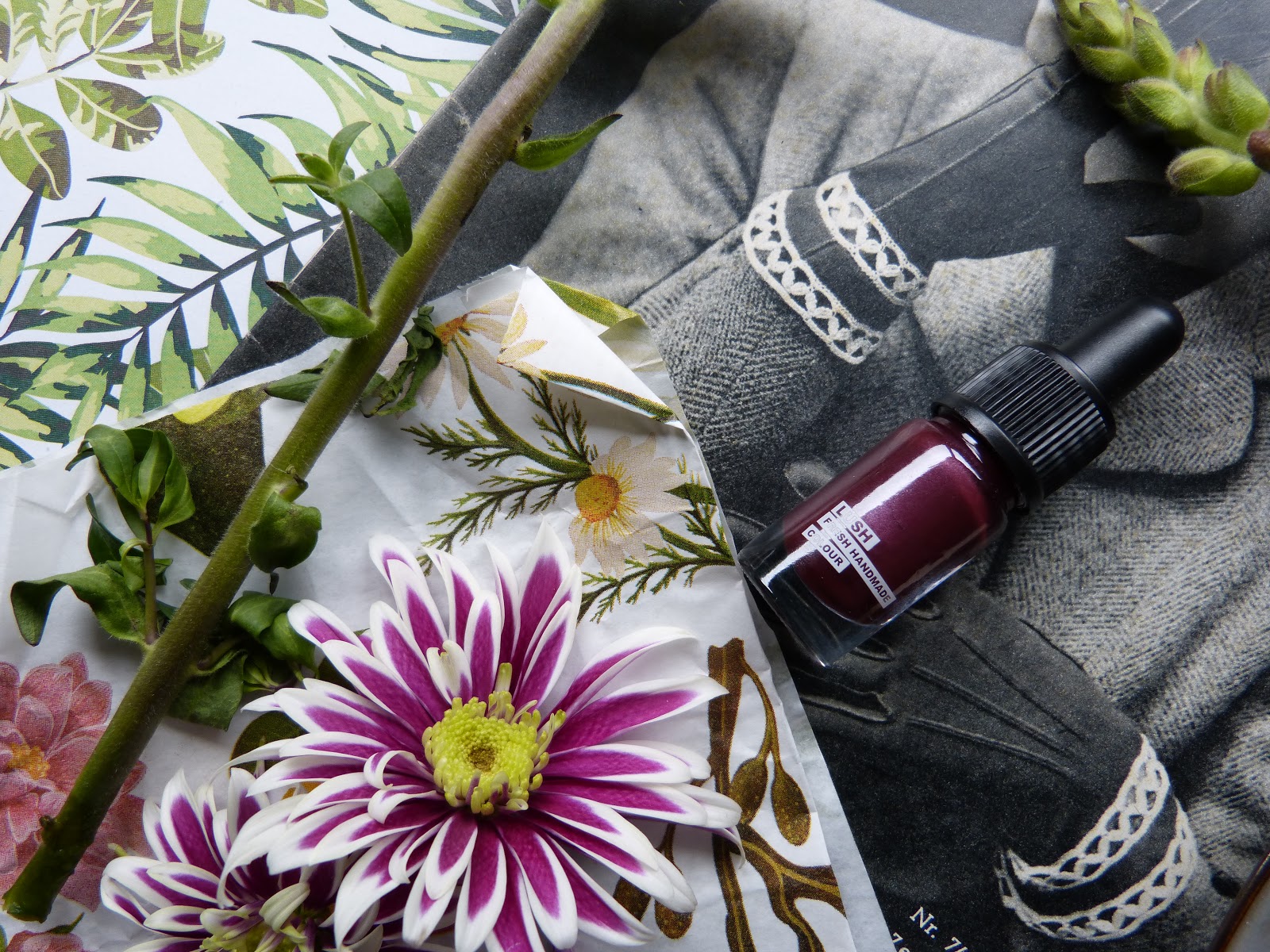
I've thought of a million-and-one (or 93,000 *winks*) different ways to start this blogpost. I could for instance start writing about the product as mentioned in the title. How it's the first time I've used one of Lush's jellies or how this particular jelly isn't part of the Christmas range but could be because of its Santa red colour. I could start this blogpost with a quote or a citation. I could start with describing my 'beauty routine'. I could start with anything anywhere. But you know what, my brain said to me, followed by a deep sigh, maybe we should start with some questions like: Why are beauty reviews the least exciting yet at the same time most hard thing to write?

"Now I'm not saying these type of posts are wrong, but it certainly takes an extra oomph to make those kind of posts interesting or exciting to read."

There's just a limited thing you can do with a beauty review. Maybe that's why most reviews I've read on this topic follows a particular sequence from 'hey how y'all doing' to 'look what I bought' to 'this is what the company says about it' to 'I like/dislike it' and finally finishing it with 'bye y'all'. Now I'm not saying these type of posts are wrong, but it certainly takes an extra oomph to make those kind of posts interesting or exciting to read. And most importantly to write. Which brings us to question two: When is a beauty review sufficient enough?


Suffice to say

Is saying 'it's a nice product, a bit slippery (but what do you expect from a jelly), the smell -described as mint mixed with cinnamon- is a bit indefinable but not indefinable enough to not mention it (I've asked everyone I know to sniff me but no one could explain the smell but they did smell it) and the product lasts for a very long time', good enough? Should I rate it? Seven out of ten or three our of five (although three seems a bit low compared to the seven, so perhaps a four...). But this makes me once again wonder about the level of entertainment that is either asked or required (if only for ones own sanity) within a beauty review. Because, yes, when I'm looking for a review I want to know the basic ins and outs within one glance, but it certainly helps if this one glance is met with humour or a certain kind of entertainment value.

"Although looking for this one-glance-wonder, I definitely appreciate when the author has put some more effort into it."

Although looking for this one-glance-wonder, I definitely appreciate when the author has put some more effort into it. The more effort, the more I might stick around and read other reviews. Not for the product but for the writer (which in my eyes is a big compliment). However this begs the question: Is a beauty review the place for a writer to showcase/show-off its 'talents' or should those tendencies be put somewhere else and the beauty review routine be respected for what it is? Or is this dependent on the intentions of the writer? Say: pure informational = bullet points, let me entertain you = rambling text? (Basically stating that less isn't more on an artistic level?)

And, if so, should the entertainer take into account review-qualities when labelling their blogpost as a review or should another word be put in place. For instance 'My Elaborated Thoughts On' or 'longview'. Even though the word review in itself doesn't implicate a short opinion-piece or assessment, it certainly, I think, signifies such intentions when the word is used within the blogosphere; as reviews within the blogosphere -especially beauty products related- are structured in a short and punchy way.


That's, like, so annoying

Now I'm not deliberately trying to derail this train of the beauty review, as it is neither in my power to derail or my intentions. But it is, I hope you agree, a bit annoying at times. Annoying because it's hard to break away from the blogosphere beauty review. Not only because naming something a review upholds certain expectations, but also because it's just so hard to think of something else. To think outside the bullet points, the 'I like it, it good' and the 'I would recommend this jelly to anyone who doesn't mind the feeling of a slimey-esque jiggle against their skin' (my sister absolutely despises it). What else is there to say? It's vegan. And? Uhm... uhm... One and one and one is three?

Perhaps this asks for more creative or original thinkers to crack this case. Perhaps there's no actual problem with the beauty review or a problem of urgent matter, as I believe reviews are still popular blogposts people eagerly read to get someone else's opinion before buying the products themselves. Maybe the prescribed structure most bloggers deploy is highly usable and attractive because of its duplicate character. You know what you're getting, both with the review as a 'genre' and after reading the review with the product.


To summarise

  • Christmas appropriate because of its festive colour
  • Nice product but chances you drop it is 100%
  • Smells a bit like mint mixed with cinnamon
  • Lasts for a long time
  • Vegan
  • Rating: 7/10 or 3.5/5

RECOMMENDED: Cheek To Cheek: Lush Rosy Cheeks Mask Review


| Instagram | Bloglovin | Tumblr | Twitter | Pinterest | Youtube |

Comment below!
(And click on 'notify me' so you can read my reply!) 


Pin this post!


Share
Tweet
Pin
Share
7 comments

Some things are self-explanatory. If you're cold you put on a jumper. If you're hungry you eat something. If your fundamental rights are violated you protest. Some things come so natural to us that questions like 'why flowers?' when looking at a summer dress is often met with 'why not?'. Flowers, in this sense, is wearing a jumper your grandma knitted, eating a gluten free bagel and shouting 'Hey man, that's not OK!'.

"But why flowers? Why not cars or gluten free bagels?"

But why flowers? Why not cars or gluten free bagels? For one, perhaps, because floral prints are throughout the centuries and throughout practically every culture the most used pattern.[1] And for two, perhaps, because flowers can get a message across. According to Clive Edwards (Professor of Design History at Loughborough University) every flower has its own symbolic meaning. Generally flowers represent calmness, harmony and innocence. However within textile designs flowers are mostly used for their decorative qualities.[2]


Lets trade!

Although flowers are a constant trend throughout history and geography, the way they are put on cloth differ per period, year and even season. Floral prints are therefore a great help for researchers trying to decipher when a costume was made and how fashionable it was.[3] Especially as designing motifs was a competitve game and designers had to constantly reinvent themselves according to the latest fashions.[4] These latest fashions weren't only dictated by self-indulgent fads induced by wanting more and greater, but also by new discoveries.

In today's global and internet-wise world it's hard to imagine that other countries were obscure references. But back in the day they were. During the so called 'Age of European Discovery', mainly instigated by Portugal at the beginning of the 15th century, discovery after discovery was made thanks to increased overseas trade with for instance India and Java. Although these trades mainly focused on getting spices like cinnamon, pepper and ginger to Europe, they also brought new discoveries to the continent like Chinese porcelain, silk, chocolate and flowers.[5]


Dating flowers

Still life flower paintings can often be more precisely dated when looking at the import date of the depicted flowers. These import dates are always very close to the date of creation. The same idea is used when narrowing down the date of a, say, 18th century dress. Together with the style of dress, the fabric, the application of the floral pattern (think embroidered, painted or used within a lace design) and how its spread over the dress, researchers can determine when during the 18th century the dress was made. So a Dutch dress with a Coreopsis verticillata (aka Threadleaf) on it is most probably not made before 1759, as that's the year the Threadleaf was first imported into the Netherlands.[6]

"Although this way of dating is very accurate, you also have to consider other ways these flowers can end up in the minds and wardrobes of Europeans."

I say 'most probably' because although this way of dating is very accurate, you also have to consider other ways these flowers can end up in the minds and wardrobes of Europeans. Botanical books and prints were for instance cheap and easily reproduced. They are also very simplistic and precise. This makes them valuable as reference material when designing decorative patterns for furniture, porcelain and fabric. So before hastily coming to conclusions, it might be rewarding to look at publishing dates of botanical books and prints whether our Threadleaf can be spotted any time earlier than its import date.[7]
  
RECOMMENDED: Dressed To Kilt: Structuralism & Poststructuralism


Dainty psychedelics

Floral prints were in the 18th century led by newly imported flowers. But sometimes fashionable floral prints were also led by other new discoveries. Take for instance the technique of silk screenprinting. This easy, fast and cheap way of transferring patterns onto fabric made the overall floral print very popular at the beginning of the 20th century. Especially when artists like Salvador Dalí and Raoul Dufy transferred their designs to fabric. Dufy was renowned for his floral patterns for École Martine, the fabric atelier for Paul Poiret.[8]

Although the 1930s are famous for their extensive use of geometrical shapes, the flower stayed a wardrobe favourite. And also during the 1940s and 50s the flower was evidently present in our daily outfits. However, as Colin McDowell (fashion journalist and academic) writes in his book The Anatomy of Fashion: "In the 1960s, florals fought with Emilio Pucci's psychedelic swoops and artist Bridget Riley's swirls - but this was a battle the floral lost."[9]

"Dainty flowers are exchanged for psychedelic prints and abstract ornaments."

Particularly during the 1960s and the beginning of the 1970s -ironically called the flower power movement- the oh so loved 'Edwardian' floral pattern is finally dismissed.[10] Dainty flowers are exchanged for psychedelic prints and abstract oriental ornaments. Influenced by the increased popularity of the drug LSD in 1964, swoops and swirls were lovingly adopted within the visual language of fashion.[11] Together with another advancement in textile technology, creating cheap throwaway paper garments, a new (floral) look was explored by many designers. Which, according to Andy Warhol, could best be described as the 'Pakistan-Indian-international-jet-set-hippie-look'.[12]


Daisy Bell

However the more realistic flower wasn't totally abandoned. Mary Quant happily marked all her clothes with the now iconic daisy logo. Thanks to her mass-produced line Ginger Group, Quant became one of the most commercially successful designers of the decade.[13] And therewith naturally dressing a lot of young ladies with daisy's. She even released a doll in 1973 called Daisy!

Together with iconic models like Twiggy, Quant made a strong argument for the floral print. One that was noteworthy for future generations (if only because of the bright colours she used in her designs). Nowadays flowers are printed in our memory thanks to its reaccuring quality on the catwalk. Or as Meryl Streep's character sarcastically and coldly says in the 2006 film The Devil Wears Prada: "Florals? For spring? Groundbreaking."[14]

RECOMMENDED: Why Is Like Almost Every French Painter Called Henri?


| Instagram | Bloglovin | Tumblr | Twitter | Pinterest | Youtube |

Comment below!
(And click on 'notify me' so you can read my reply!)


Pin this post!


Sources:
[1] C. Edwards, How to read pattern: A crash course in textile design (Librero, 2011), p. 58. 
[2] See note 1, p. 76.
[3] E. Geene, 'In volle bloei: Een onderzoek naar het gebruik van realistische bloemmotieven in de mode van de 18de eeuw in Nederland', p. 15, from: Kostuumvereniging, Kostuum (Zwoll: Epos Press, 2010).
[4] See note 3, p. 24.
[5] C. McDowell, The Anatomy of Fashion: Why we dress the way we do (Phaidon, 2013), p. 41; De Gouden Eeuw, "Krant", http://goudeneeuw.ntr.nl/krant/#/overzicht/1585/. 
[6] See note 3, p. 16.
[7] See note 3, p. 25.
[8] See note 5.
[9] See note 5.
[10] See note 5
[11] C. Blackman, One Hundred Years of Fashion (Laurence Kinf, 2012), p. 248.
[12] See note 11, p. 240, p. 251.
[13] See note 11, p. 224.
[14] J. Peterson, "The 19 best quotes from 'The Devil Wears Prada'" (5 October 2014), http://www.mtv.com/news/1953144/devil-wears-prada-fashion-quotes/.

Share
Tweet
Pin
Share
15 comments

I love fashion and make-up for the way it helps me to express myself. I can show my taste and values through the clothes I wear. My red Chanel lipstick is basically me in a bottle. I take pride in being greeted as 'the Chanel-girl' when walking into our local beauty store. The connotations that come with it, being luxurious, classy and quality, is thanks to my lipstick reflected to the world. I (want to) identify myself with these connotations. My self-perception and expression are build on these qualities. Which I happily show off every time I casually take out my make-up bag, pick up my lipstick and pout my lips.

"I happily ignored my gut feeling and betrayed my values for a brand."

Or at least: I used to. I used to take pride in being 'the Chanel-girl'. I happily ignored my gut feeling and betrayed my values for, essentially, a brand. Because it's easier to turn a blind eye to the facts when being too busy trying to express your identity. Catchphrases like L'Oréals 'Because I'm worth it' directly plays with this idea. Valueing yourself above anything else. As Rebecca Breuer cites philosopher Simon Blackburn in her dissertation: "Since we are worth it the urgency to think about related issues, such as whether the people that produce our clothes and cosmetics, the generations to come and our environment are of equal worth, seems to dimnish or at least becomes bearable."[1]


The bear necessities

In 2004 the European Union banned animal testing for finished cosmetic products. And in 2009 they also banned animal testing for ingredients used within cosmetic products. In 2013 these bans got replaced by the Cosmetic Regulations act, which basically states the same thing, but also includes a ban on selling animal tested products.[2] But this doesn't mean that all cosmetic products produced or sold within the European Union are cruelty free. According to PETA in 2016 more than 250 brands still tested on animals which affects, according to the RSPCA, over 27.000 animals a year.[3]

At the beginning of 2016 I reached a point where I couldn't ignore my choices any more. I was shown the 'roots' of my justifications and reasoning and didn't like what I saw. By offering a new way of thinking, or at least an 'extra component' to my original thinking process, I decided to put my money where my mouth is. Because do I really value my 'Chanel-girl' status over the lives of 27.000 animals?


Identity politics

Although Rebecca Breuer's dissertation focusses on fashion, I think the points she makes are applicable to make-up too (not least because cosmetic products are often sold by fashion brands). She for instance writes about the way marketing promotes overconsumption, vanity and the importance of self-esteem only as an incentive of gaining capital. By playing with identity politics brands have internalised and naturalised the idea that fashion is representable to our being.[4]

"Without being aware of our contribution, production is exchanged for profit."

Because I was so busy being 'the Chanel-girl' I gleefully forgot or ignored what this meant besides the branded connotations. Breuer: "Without being aware of our contribution, production is exchanged for profit (...)."[5] And this profit isn't often concerned with sticking to morals. Just look at NARS, who as a company apparently favours increasing their market and swaps their cruelty free status for more sales as if it meant nothing.[6]


Battling bunnies

Although animal testing within the cosmetic industry becomes increasingly scrutinesed, it's still an ongoing battle. Not least because of the way brands are selling their products as a confirmation or extension of 'self', deflecting from the bigger picture. Because this bigger picture shows it's OK to pour chemicals into the eyes of rabbits in favour of profit.

The connotations of condoning and funding torture opposed to luxury and class really made me think twice about 'the Chanel-girl'. Although I've decided to use the products until they run out (almost there), the pride for my red lips has faded to an ultimate low point. Because no, I do not value representing my personal identity through brands who test on animals as a way to gain more profit above harassing, hurting and torturing animals.  
Do you?


RECOMMENDED: This Is Love


| Instagram | Bloglovin | Tumblr | Twitter | Pinterest | Youtube |

Comment below!
(And click on 'notify me' so you can read my reply!)


Pin this post!


Sources:
[1] R.L. Breuer, Fashion Beyond Identity: The Three Ecologies of Dress (University of Amsterdam, 2015), p. 143.
[2] European Commission, "Ban on Animal Testing", https://ec.europa.eu/growth/sectors/cosmetics/animal-testing_en.; Cruelty Free International, "EU ban on cosmetics testing and why the Leaping Bunny is still needed", https://www.crueltyfreeinternational.org/what-we-do/corporate-partnerships/eu-ban-cosmetics-testing.
[3] K. Chitrakorn, "Is the Clobal Cosmetics Market Moving Towards a Cruelty-Free Future?" (13 January 2016), https://www.businessoffashion.com/articles/intelligence/is-the-global-cosmetics-market-moving-towards-a-cruelty-free-future.
[4] See note 1, p. 144.
[5] See note 1, p. 197.
[6] S. Young, "NARS Cosmetics boycotted by consumers as it announces it's no longer a cruelty-free brand" (29 June 2017), http://www.independent.co.uk/life-style/fashion/nars-cosmetics-boycott-cruelty-free-brand-no-longer-consumers-chinese-market-china-animal-a7814466.html.

Share
Tweet
Pin
Share
No comments
Older Posts

About


About Me

All dressed up with no place to go! Fashioned by Pluche is a personal lifestyle blog written by Dominique, a 20-something thinking enthusiast, amateur philosopher and rambler. As a creature of comfort/concern she lives her life mostly under a duvet contemplating life, occasionally blogging about the experience...

Follow Fashioned by Pluche

  • Google+
  • Pinterest
  • Bloglovin
  • Instagram
  • Twitter
  • Facebook

Facebook


Fashioned by Pluche

recent posts

Blog Archive

  • ▼  2019 (6)
    • ▼  March (1)
      • It Never Happens In Your City | A Response
    • ►  February (1)
    • ►  January (4)
  • ►  2018 (24)
    • ►  December (1)
    • ►  September (3)
    • ►  July (2)
    • ►  May (7)
    • ►  April (3)
    • ►  March (2)
    • ►  February (3)
    • ►  January (3)
  • ►  2017 (30)
    • ►  December (13)
    • ►  November (1)
    • ►  October (1)
    • ►  September (3)
    • ►  August (2)
    • ►  July (3)
    • ►  February (3)
    • ►  January (4)
  • ►  2016 (64)
    • ►  December (6)
    • ►  November (8)
    • ►  October (4)
    • ►  September (7)
    • ►  August (9)
    • ►  July (8)
    • ►  May (1)
    • ►  April (1)
    • ►  February (5)
    • ►  January (15)
  • ►  2015 (173)
    • ►  December (15)
    • ►  November (8)
    • ►  October (20)
    • ►  September (11)
    • ►  August (1)
    • ►  July (11)
    • ►  June (17)
    • ►  May (16)
    • ►  April (15)
    • ►  March (15)
    • ►  February (20)
    • ►  January (24)
  • ►  2014 (134)
    • ►  December (14)
    • ►  November (17)
    • ►  October (18)
    • ►  September (11)
    • ►  August (9)
    • ►  July (15)
    • ►  June (10)
    • ►  May (14)
    • ►  April (6)
    • ►  March (9)
    • ►  February (4)
    • ►  January (7)
  • ►  2013 (116)
    • ►  December (6)
    • ►  November (1)
    • ►  October (7)
    • ►  September (16)
    • ►  August (40)
    • ►  July (32)
    • ►  June (11)
    • ►  May (3)

Twitter

Tweets by Hi_Dominique

Facebook Twitter Instagram Pinterest Bloglovin

Created with by ThemeXpose