• About
  • Contact
  • Disclaimer
  • Categories
    • Fashion & Beauty
    • Lifestyle
    • Bookshelf
Fashioned by Pluche. Powered by Blogger.
Instagram Bloglovin Tumblr Twitter Pinterest Youtube

Fashioned by Pluche

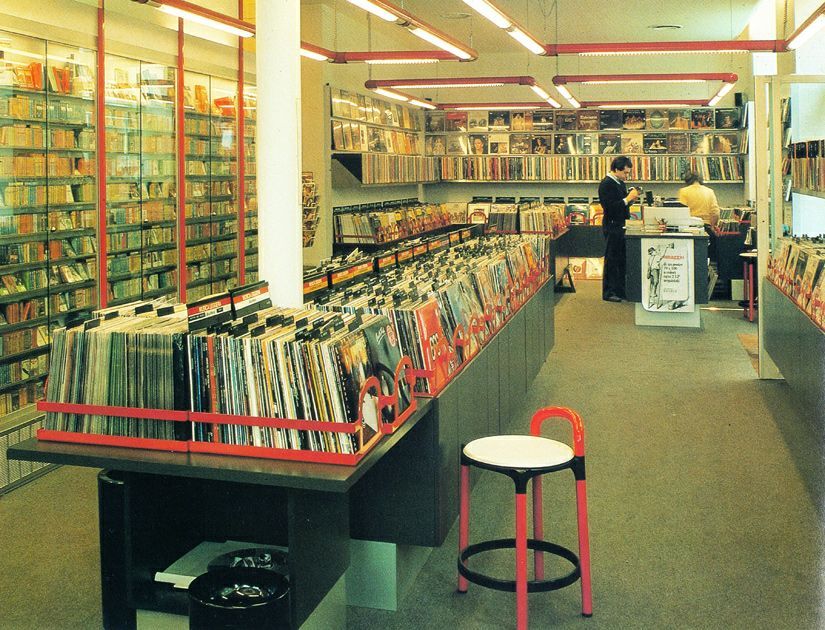
Recordshop, Milan, Italy, 1980.

Music shapes the way you experience the world. Sitting in a car looking out of the window listening to Lola by The Kinks or Careless love by Hugh Laurie is a completely different experience, amiright? The same goes for the music we grow up with. We not only choose our own music when we're but wee little ones, but we are -sometimes forced- to listen to the music played by our parents. This not only makes us pick certain songs when sitting in a car, but it also creates a particular soundtrack for our (younger) years on this earth.

"But don't be fooled by her sweetness, she still has a sour taste on the edges."

This idea spurred out of me during a random supper, which ended in an interrogation. A friendly, passionate interrogation. As you could read in part 1, my father is quite the rock ballad fanatic and has some sharp edges in regards of nowadays beats. My mother SPOILER ALERT is a bit milder at heart. But don't be fooled by her sweetness, she still has a sour taste on the edges.

Birthday party September 1970. My mum is the cute girl standing in the middle (with the white socks).

Paradise

In this part: MY MOTHER aka Marjan (Maria + Johan 'Jan' = very creative grandparents). Another (late) 1960s child, who once when she was younger eagerly recorded Paradise by the dashboard light by Meat Loaf from the radio on a cassette tape, rewinded it and wrote down, sentence by sentence, the lyrics. Why? She was electrified by the song. The lyrics, which she discovered sentence for sentence when listening back to her cassette, only made her more and more excited. And, although it took her some hard work, she finally had the whole story in front of her. The first one of her class, if not the first one in the Netherlands. But quite like within the song, this 'accomplishment' is met with an anticlimax: a week later the lyrics were published in Dutch teen magazine Hitkrant. "But now I never forget those lyrics!", she says triumphantly. Which I can personally confirm.

What's your favourite kind of music?

Pop, jazz... Honestly I like a whole lot of different genres. Ballads. I mean, I listen to almost everything. ;)

"Why? Because of the way they looked, of course."

What was the first vinyl record you bought?

Dolly Dots! Why? Because of the way they looked, of course. But also how they sang. But mostly the way they looked. Before buying that record however I'd bought a single. My first single was You and me by Spargo. They actually performed at my school which was very impressive.

At our house there was constantly music playing in the background. Grandma was a big Harry Belafonte fan and grandpa loved Shirley Bassey! I really enjoyed their music and I think that's the beginning for my jazz love. Though I don't like jazz jazz, I'm more of a popular jazz type as I think you need to be able to hear what they're playing to enjoy it.

What do you think of current music compared to back-in-the-day?

I don't think it's bad. There are plenty of artists who are absolutely smashing it and can really touch you. *ahum* Adele *ahum* I really hate trance or house music or anything electronic dance club headache beating. Although I think that when I was younger I had more of a 'relationship' with music. I don't have the foggiest who are hot right now.

First concert you've been to?

Simple Minds with Simply Red as their opening band at the Amsterdam Forest (10 June 1986). It was quite the experience. (nervous laugh) I didn't actually enjoy it as I don't like crowded spaces and there was a lot of pulling and pushing.

Most impressive live performance you've experienced?

I haven't actually been to many concerts as, you know, I don't like crowded places. I once went to a concert of Renee Froger in Rotterdam, Ahoy. We were sat on the first ring of the stadium and I kid you not, when everyone got excited you could feel the concrete moving in flows underneath your feet. I sat nailed to my seat and cried for most of the concert. However I went to one of his concerts in a theatre in Utrecht and it was amazing. The floor didn't move an inch. ;)

"I actually really enjoyed their music, so it wasn't that I was there only for you."

I think out of all the concerts I went to, Tokio Hotel must be the most impressive one. I actually really enjoyed their music, so it wasn't that I was there only for you. And I just loved the way they looked. Especially Bill Kaulitz. It's I guess the same with the Dolly Dots. He really carried an interesting look that intrigued me and caught my attention.

Who would you like to see live? (Dead or alive)

Paloma Faith, Adele and Michael Bublé. Although attending concerts is physically challenging for me... Also the prices of the tickets for Adele and Michael Bublé are insanely high. But still.

Who's you favourite contemporary artist?

See above!

A fun musical anecdote?

I really, really hate hiphop. So when there was hiphop on the background in the hospital as I was about to pop out your sister, your father very dearly asked for it to be turned off. Which would've been great during any other situation but NO I demanded they turned back on the music. Those beats, they were suddenly the best think I'd ever heard and no one dare to turn it off again. I actually frantically yelled... I blame the hormones...
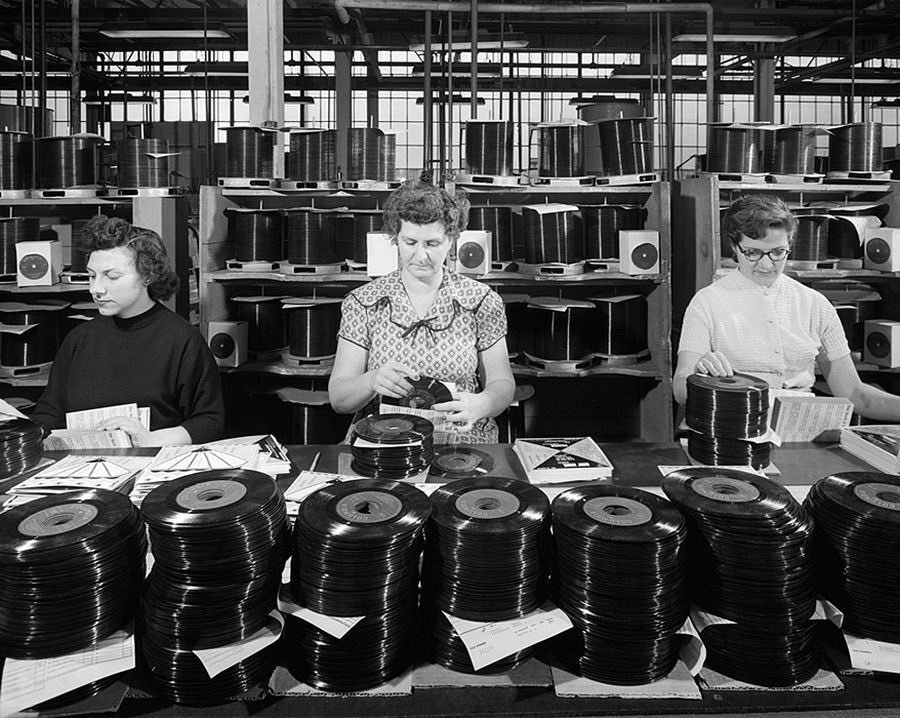
Production line at CBS Columbia Records, 1953 by Ezra Stoller.

5 jazzy pop songs recommended by Marjan

In no particular order...

  1. When we were young by Adele
  2. Me and Mrs. Jones by Michael Bublé
  3. Barcelona by Tommy Christiaanse & Tania Cross
  4. Stone cold sober by Paloma Faith
  5. Angels eyes by Wet Wet Wet


RECOMMENDED: A Musical Trip Down Memory Lane #1


| Instagram | Bloglovin | Tumblr | Twitter | Pinterest | Youtube |

Comment below!
(And click on 'notify me' so you can read my reply!) 


Pin this post! 


Share
Tweet
Pin
Share
8 comments
All pictures used in this blogpost are borrowed (stolen) from Batsheva's post 'How To Survive As A Cultural Minority' which, fun fact, actually inspired me in writing/reaching out to her on this topic. All credit goes to Batsheva and her photographer Yitta Fetman from You R Photography.

In 1742 poet Thomas Gray ends his poem Ode On A Distant Prospect Of Eton College with the words: "Where ignorance is bliss, 'tis folly to be wise." Which can be seen as similar to 'out of sight, out of mind' or the catchy 'what you don't know doesn't hurt you'. All of these so to says, I feel, are from the get-go guiding you to think of the more darker or sinister things in life you'd like to ignore. 'Ignorance is bliss' most often meaning that if you simply don't know or are unaware of something unpleasant, you can't be troubled by it. Because you don't know. So it's hard to know what you should know if you, you know, don't know. This can sometimess also turn into willful ignorance: intentionally ignoring that what you should know just so you can't be taken accountable for it.

"I think that because Christmas is such a BIG part of Western mainstream culture, it often willfully ignores other notions of togetherness, celebration and religious presence."

Accountability in this sense is mostly said in terms of law, however it's also such an easy excuse to use to get out of thinking, looking or experiencing the world beyond yourself. It gives you a certain legitimacy to explain everything that exists outside of yourself as automatically belonging to the pile of 'other' (which subsequently stands beneath you). I think that because Christmas is such a BIG part of Western mainstream culture, it often willfully ignores other notions of togetherness, celebration and religious presence. Because, as I've written before, Christmas is a Christian holiday. Although it's been normalised to an extend that its 'religiousness' is only meaningful to those who conciously endorse it within such a context or know where to look for, it still reinforces a particular ideology which -however commercial things will go- is entangled with this specific background.


Use your Dutch g

"So what?", you might ask, while wearing plastic pink party glasses shaped like two flamingos wearing Christmas hats (I saw them at H&M, for those who are interested in saying "So what?"). Well, today is the 12th of December, which can only mean one thing (well, actually it can mean multiple things, but we're going with the one for now): it's the first day of Hanukkah! Or Chanukkah, as Batsheva from Cynical Duchess explains: "It's a huge misconception about how Hanukkah is pronounced, so most Jewish people actually write it with a 'ch' because it's pronounced with this quite hard low growling sound." So, you know, your regular Dutch 'g'. "This is because", she continues, "the word is derived from Hebrew and refers to a historical biblical word."

When I was younger I followed classes on different religions which I was, surprisingly, good in. Surprisingly as I'm non-religiously raised and my mother is basically ridiculous ignorant when it comes to believes. And then, naturally, within my Cultural Heritage study (and also actually now within Gender Studies) I've learned quite a few things about rituals and traditions. However the who/what/where of Hanukkah has always been a bit blurry. The thing that I do know: it has something to do with lights that's why there's this candle holder; or, as Batsheva enlightened me, a menorah. And that's why Hanukkah is also sometimes called the Festival of Lights. And I was right! However there's so much more to it than just pretty twinkling lights...


I believe in miracles

"We celebrate Hanukkah because during the time of the Ancient Greece a lot of Jewish people lived in Israel", Batsheva begins. "The Greeks were conquering tons of different land and, obviously, they wanted Israel too and take over the Jews. What did they do? They basically came to Israel inserted a king called Antiochus. At the time he was ruling over Syria and made his base in Israel inside our holy temple." But it didn't stop there, besides this desecration, Antiochus & co bullied the Jews and forbade them to practice their believe.

Batsheva: "So he banned us from doing a lot of different things in our religion. And that's like, a huge thing, because that's who we are. We have this relationship with God and all we ask for is that we can practice our believes. We don't ask everyone to be Jewish, we don't do missionaries, we just want people to leave us alone." However alone isn't what Antiochus had in mind. As said, he desecrated the holy temple and smashed jars of olive oil which is used to lit the menorah. "Within the temple there's this huge menorah which is traditionally lit. But now there was no more oil to light it with because he had smashed everything."

"So they lit the menorah and #MiracleTime instead of lasting for one day, the oil lasted for eight days and eight nights."

While everything was looking bad the Macabees, a group of brothers, rebelled against Antiochus' ruling and -skipping a bit- they went into the holy temple during the war (yes, there's a war now. As said, we're skipping a bit) and they found one jug of oil that was only supposed to last for one night. "And they were like, you know what", Batsheva recites, "we have faith in God that everything's going to be fine." So they lit the menorah and #MiracleTime instead of lasting for one day, the oil lasted for eight days and eight nights. "So that's why we celebrate and light the menorah for eight nights. Lighting one more candle each night until all the candles are lit."


Tell me why

And that, my dearest reader, is the story (short-cut version) of Hanukkah. Now there are also, obviously, other aspects to the celebration of Hanukkah which goes beyond Antiochus trashing the temple. He wanted to eradicate Judaism. And, as we all probably can guess, this wasn't done by holding a balanced debate with prose and cons, but by blood shed, absurd, nauseating and otherwise suppressing actions and rules. Does this got something to do with the war we've just skipped. You bet ya!

The Macabees went to war against this huge Greek army, and, against all odds, they won. Batsheva: "And that's the true miracle of Hanukkah which we commemorate and celebrate each year. And is passed down from generation to generation, to know that God is with us and no matter how many times people try to kill us or try to eradicate us, we will continue to exist." Which is, as you might agree, a very strong message to celebrate. However, I almost didn't dare to ask but what I think might be an important (ignorant) question (an ignorant) someone -perhaps the same person wearing those flamingo glasses (although, to be honest those are pretty rad)- would ask. Out of curiosity. Out of habit. So... what does Hanukkah have what Christmas doesn't?

"Do you even know why you hang a tree with like ornaments all over?"

"Now, I'm not an expert on Christmas", Batsheva begins, "but what I know is that you're commemorating the birth of Jesus. But there are a lot of customs that go with this celebration which I feel like people do these but they don't know why. Do you even know why you hang a tree with like ornaments all over? From what I recall this actually comes from a pagan practice [it is] and Christians aren't pagans [they aren't]. This always confuses me."

Especially as Hanukkah, as Batsheva tells me, is full of traditions but these have a clear source and aren't mashed up together with other religious practices. "That makes me feel really good about it. That we're not doing it for no reason, that we've got a purpose. And it's a beautiful thing to gather around the menorah and light it. Of course it's a holiday of lights, with family, gathered around the fire place or whatever, playing dreidel and eating all of the oily food. But, like, we're not doing it for no reason, which makes it even better."


Because...

"We for instance eat oily food like, basically these fried donuts called sufganiyot and latkes [which is the Yiddish word for it and Batsheva is Middle-Eastern, but, like, just go with it] which is fried potato or spinach and eggs, sometimes eaten with apple sauce or with other kinds of sauces depending from which culture you're from." These oily food, you might guessed it, are eaten to commemorate the last oil for the menorah and as a celebration of prosperity.

Dreidel, the game mentioned above, are these little colourful tops with Hebrew letters on them saying 'big miracle happened there' or in Israel 'big miracle happened here'. When it falls on a certain letter you get chocolate coins, or have to put back half or loose it all. Jews were spinning tops when the Greek came around inspecting whether they adhered to their 'no Judaism' rules. Batsheva: "Because back when the Greeks weren't letting us learn from the Torah, so people would hide in caves and would learn and teach the kids from the Torah."

"So when the Greeks would come inspecting they would hide all the books and Torah scrolls and they would take out these tops and they would all be spinning tops. Which is actually really ridiculous if you think about it, but that's what actually would happen. And the Greeks were like 'Ok these people are crazy, sitting in caves spinning tops, which is like really weird and suspicious but we can't find anything, so whatever'."


Although the world might make it seem that ignorance is winning the race, I'd like to sign a petition that states 'ignorance ISN'T bliss'. Or not always, at least. By opening yourself up to other cultures, religions and just ideas, you can learn a lot. This lot doesn't always have to be something you personally endorse or have to nod yes to until your head falls off. But through familiarising yourself with 'things unknown' and understanding the workings behind it, you can see the world or sympathise -however limited- through the eyes of the other. And, as I hopefully demonstrated above, the other isnt as 'other' as it's often made out to be.

I'd like to whole-heartedly thank Batsheva from Cynical Duchess for sharing her knowledge with me, Even though we both didn't really had time for it... But, you know, this demonstrates somewhat my point. As the Dutch saying goes 'waar een wil is, is een weg' [where there's willingness, there's a way], and this way can only find people walking on it if we are there to unplug the baubles from our ear-holes and care to listen and become knowledgable (yes, I'm still the queen of metaphors).

Follow Batsheva on Instagram and Twitter!


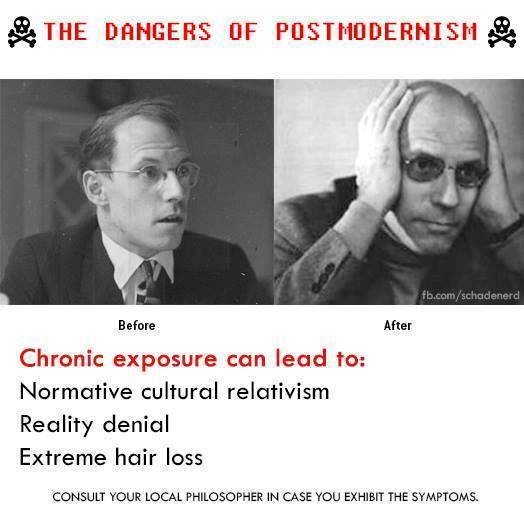
RECOMMENDED: Michel Foucault & His Thoughts On Representation


| Instagram | Bloglovin | Tumblr | Twitter | Pinterest | Youtube |

Comment below!
(And click on 'notify me' so you can read my reply!) 


Pin this post! 


Share
Tweet
Pin
Share
13 comments

"If madness is the truth of knowledge, it is because knowledge is absurd, and instead of addressing itself to the great book of experience, loses its way in the dust of books and in idle debate; learning becomes madness through the very excess of false learning."
Michel Foucault, Madness and Civilization: A History of Insanity in the Age of Reason, 1961, p. 22. 
(no I haven't read the book. yet.)

Guess what! #Blogmas day 11 is, once again, very unprepared. HOWEVER for uni the other day I had to give a presentation on representation. As some of you might know I've already discussed representation before in relation to tartan. Unfortunately this presentation wasn't as funky, but it certainly gives a new dimension to the understanding of representation and how to approach it. AND, may luck be on my side, I had to cover one of the philosophers I did mention but didn't really went into when discussing the tartan. That philosopher being *dramatic drum roll* Michel Foucault.

Now I think quite a lot of people, especially students, are in some ways (some in many ways) familiar with the name Foucault. But for those unfamiliar or in need of a quick fresh up: here's Michel Foucault and some of his thoughts on representation...

Foucault with a cat. What else?

Yet another French philosopher

Michel Foucault (1926-1984) was a French philosopher and particularly a so called philosophical historian. His particular look on the role of history was instigated by German philosopher Friedrich Nietzsche's book Unzeitgemässe Betrachtungen or Untimely Meditations (1873-1876). Foucault first read this book during the summer of 1953, at the age of 27, which opened a whole new intellectual world for him.

The book concerns itself about the 'Uses and Abuses of History for Life' and basically criticises the way we teach and think about history as a 'thing of the past'. However, as Nietzsche argues, it's crucial for us to dig out the ideas, concepts and examples of the past not merely to say 'yeah, that happened', but as a way to help us lead a better life now.

"It's crucial for us to dig out the ideas, concepts and examples of the past not merely to say 'yeah, that happened', but as a way to help us lead a better life now."

Foucault ran away with this idea, together with existentialist theories -which emphasizes the existence of the individual person as a free and responsible agent determining their own development through acts of the will- and with dialectical theories, specifically that of Karl Marx -which concerns itself to find 'the truth' through applying multiple points of views about a subject through 'reasoned arguments'.

He applied these different components onto many different things such as law, prisons, doctors, psychiatrists and art. Central to his work is analysing the relationship between power and knowledge. In true Karl Marx style, which, to remind you, criticises the development of capitalism and the role of class struggles, Foucault tried to peel off the structure of the bourgeoisie modern capitalist state.

Poststructuralim is the place to be

Now you might think: That Foucault guy sounds alright, but what has all of this to do with representation? Well, for those who've read the first chapter of Representation by Stuart Hall (2013) might vaguely remember reading: "Semiotics seemed to confine the process of representation to language, and to treat it as a closed, rather static, system." (p. 27)

This can be called the structuralist approach. However, as was the fashion during the 19th century, Foucault began to criticise this way of thinking and thus -mind you, not single handedly- created a poststructuralist approach. Jacques Derrida (1930-2004), yet another French philosopher, focused within this poststructuralism on meaning as an unendless chain which depends on structural difference but also on temporal relations of before and after. This process will lead to a play of signifier to signifier into eternity, which can never be truly grabbed or controlled.

"Now you might think: That Foucault guy sounds alright, but what has all of this to do with representation?"

However moving on to Foucault, who also incorporated this unendlessness but than more confined to his notion of power and knowledge. Herewith he adds the idea of discourse into representation, which is basically thus a mixture of Nietzsche's idea of the role of history, existentialism and dialectics mixed together. Discourse concerns itself about language (that what we say) and practice (that what we do). As Hall writes:

"What concerned him most was the production of knowledge (rather than just meaning) through what he called discourse (rather than just language). His project, he said, was to analyse 'how human beings understand themselves in our culture' and how our knowledge about 'the social, the embodied individual and shared meanings comes to be produced in different periods'." (p. 28)


To subject or not to subject

Besides introducing the concept of discourse into representation, he also introduced 'the subject'. Who/what/where is the subject? Conventionally the subject is 'an individual who is fully endowed with consiousness'. It suggests that, although other people may misunderstand us, we always understan ourselves because we are the source of meaning in the first place.

Ferdinand de Saussure (1875-1913) mainly ignores 'the subject' except within his idea of parole where the subject influences the way meaning is produced as it is spoken by an individual. But, because this can't be scientifically analysed, he simply left it out in his understanding of language. Foucault also isn't particularly keen on the subject as he finds discourse, which is entangled with power which is the source of knowledge, isn't dependend on a particular subject for power/knowledge to operate. Basically he says that the subject is a product of discourse. So whatever it may produce, they are limited to their time and culture:

"The subject can become the bearer of the kind of knowledge which discourse produces. It can become the object through which power is relayed. But it cannot stand outside power/knowledge as its source and author." (p. 39)


Stuart Hall concludes that Foucault's approach to representation isn't easy to summarise, and I whole heartedly agree. The most important thing to take from Foucault's approach is his introduction of discourse into representation. This broadens the way meaning can be analysed and how the process of meaning is dependent on the discourse in which it's produced and interpreted.

RECOMMENDED: THE Reality: Mrs Dalloway, D&G and Family


| Instagram | Bloglovin | Tumblr | Twitter | Pinterest | Youtube |

Comment below!
(And click on 'notify me' so you can read my reply!) 


Pin this post! 


Share
Tweet
Pin
Share
1 comments

My Christmas-rash, aka my non-religious, non-traditional and non-social background that prevents me from experiencing merriness, is acting up again. I curl my lip in disapproval when walking past blow-up snowman, I hiss at people cheerfully singing 'It's the most wonderful time of the year' and I double roll my eyes when Santa asks me what I want for Christmas this year.

"Whatya looking at?!, I throw in for good measure while shaking my head and sticking out my tongue."

"None of your business, old man!", I shout at him with discontent only truly felt when directly looking into the sad and confused eyes of a stranger walking out of the old people's home, who accidentally happens to have a silver beard as well as wearing a red coat. "Whatya looking at?!", I throw in for good measure while shaking my head and sticking out my tongue. That should teach him! "Naughty or nice", I mutter to myself, "I'm an independent woman who don't need no man to fill up my consumerist black hole of forever unsatisfaction, I have an ever-growing student loan to take care of such things 24/7 365 days a year!"


Tell me why

As questioned in my first Blogmas post, I wonder why or where my unfestiveness comes from and there's only one way to find out... My mother. My dearest mother who, as might be expected, has been responsible for my physical and emotional well-being. Which means that in some way my 'emotional distress' and disinterest for this widely celebrated holiday should be found with her; as the [metaphorical] baubles and twinkle lights can't be added without a [metaphorical] Christmas tree to begin with. So perhaps it's not my unfestiveness but mirrored unfestiveness. This asks for twirling my detective moustache a la Poirot (David Suchet-style of course) and diving into the roots of this problem...

We are self-aware non-festive people. However you bought a bauble shaped like a red car the other day. Two questions: what's the matter with you? And is this the festive turn of the century?

I haven't gone mad, I swear. But yeah. It was a spur of the moment kind of thing. And I really like it, I do, we can hang it in a wreath or something or... you know, just keep it safely tucked away in the closet. Behind closed doors...

We've recently got some old photo books from grandma, and I noticed that there are multiple pictures with Christmas trees proudly on display, people smiling, having fun. Did you had any particular Christmas traditions back in the day?

On Christmas day we always, as I think is common, had a 'fancy' meal together. With my grandma, grandpa, sister, brother, their partners and children etc. A real family affair. The table would be set with a damask tablecloth and fancy tableware, which otherwise was carefully put away for the other 364 days. And candles. Everywhere candles! From top to bottom. Grandpa would light up the whole house with candlelight. If there was a hint of space, there was a candle to fill it up. He was almost like a merry pyromaniac.


I remember grandma always had a Christmas tree and we used to have -before they all broke- quite a lot of baubles from grandpa Was putting up the tree 'a thing' when you were younger?

We always put up the Christmas tree on the 20th of December, the day after grandma's birthday. And it would stay there until the Twelfth Day (January 6th). Decorating the tree was always a very special event. We used old baubles that were passed down through the generations within our family. And each year we alternated between white lights and coloured lights. One year white, the other coloured, white, coloured etc. And I, as youngest, would always be lifted up to put the peak on top of the tree.

This all sounds fun and nice. So: why have you stopped spreading the Christmas spirit?

I don't hate Christmas. Just in our house. Actually when you were younger we celebrated Christmas in true British-style (i.e. extravagantly compared to our more 'modest' idea of Christmas). We had garlands wrapped around the railing with big red bows and presents and lights, the whole shebang. The day after Sinterklaas (Dutch tradition celebrated on the 5th of December and origin of Santa Claus) when you and your sister would come home from school, I'd already put up the tree and all the other Christmas-extravaganza. However the closer we came to Christmas, the more Christmas stuff would disappear. And on the second day of Christmas (Boxing Day) the Christmas tree would already be thrown out.

But why is Christmas now 'banned' from our house?

I'm just not feeling it. Or have felt it these past couple of years. Although I absolutely love Christmas songs. I can already listen to Christmas songs when November begins. Naturally all 1980s. Modern Christmas songs just don't capture that sound. Wham! is naturally number one. Last Christmas must be the Christmas song of the century.


Although many people have seemingly forgotten this, but Christmas is originally a religious holiday. I know grandpa was raised Lutheran and grandma Protestant. Although they weren't religious people, did they take any of their upbringing into the way you celebrated this season?

No. We never went to church or something. I've been once to church, on Christmas eve, together with my niece. That was quite the experience. I really didn't know anything about religion and just sat there with my mouth wide open thinking 'well this is something completely different'.

"One Christmas, when I was I think fourteen years old, I was allowed to drink my first glass of wine."

Do you have a favourite Christmas memory?

Not necessarily favourite, but one Christmas, when I was I think fourteen years old, I was allowed to drink my first glass of wine. Before that we already drank eggnog and I believe the percentage of alcohol was much higher in that than with the wine...

And... Did you like it?

No! It tasted horrible! Definitely went back to the eggnog!


To be honest, I don't think Christmas in particular is the problem. I think in general we are a bunch of party poopers. Why do you think that is?

You're abslutely right and I really have no idea. Maybe because we don't need all the fuss or glitters or trees or baubles to appreciate one another and have a great time together.


We had to go to the garden centre, again, as I needed a Santa to stage 'an accident with' for Blogmas Day 2 (yes this was indeed written before my third trip to the garden centre. As I said, I practically live there now). When walking around all the stalls they've put up, selling all kinds of Christmassy delights, my mother enthusiastically declares: "Shall we get a Christmas tree or mistletoe or...". I look at her in disgust, "we what?". She picks up a Santa bauble, "Look this one is nice." "No", I snap back. "You know what", she says sighing, "I don't think I'm the source of Grinchmas...".

RECOMMENDED: A Musical Trip Down Memory Lane #1


| Instagram | Bloglovin | Tumblr | Twitter | Pinterest | Youtube |

Comment below!
(And click on 'notify me' so you can read my reply!) 


Pin this post! 

Share
Tweet
Pin
Share
3 comments

It's day three of 'I haven't written anything yet and it's already 22:35'. LET'S DO THIS!!!

Today I went to Amsterdam (again) to attend Fashion Fest 2017 at the Tropenmuseum. What's fashion fest? Good question. I hadn't heard of it either before Thursday (that was one of the things the meeting was about), but it's a fashion contest where designers, makeup artists and hair stylists compete against each other inspired by an object from the museum. And only one can be the winner... (Just to be clear: the designers don't compete with the makeup artists, but there are different groups consisting of design/makeup/hair who then compete with other groups).

"I've basically dealt with this kind of stuff for four years already and man why can't I ever get a break from stuffed tigers in a museum."

As said, I hadn't heard of it before and didn't really had any expectations. Because what must one expect from a fashion contest? When I was still studying Cultural Heritage we went to the Tropenmuseum -what felt like- daily so I knew what to expect there. Which is, for those who are unfamiliar with the Tropenmuseum, one of the largest museums in Amsterdam specialised in ethnography. Funnily enough I'm currently reading the chapter 'The Poetics and Politics of Exhibiting Other Cultures' in Representation by Stuart Hall (ed.) for uni and although I can't get through it because I've basically dealt with this kind of stuff for four years already and man why can't I ever get a break from stuffed tigers in a museum (yes, that's a shout out to Kenneth Hudson whose tiger logic (for those uninformed: a tiger in a museum is a tiger in a museum and not a tiger) hunted us Cultural Heritage students for four years, only to be surpassed mid year four by my brilliant teacher who said: "Don't throw with a stone, throw with a bird". Which became our 'inspiring' Facebook banner and uplifting mantra ever since. Because who knows what she meant by it but we all accepted her madness by then. Apparently we Cultural Heritage people just love our animals).


Part of the exhibition 'Fashion Cities Africa'

Right. Back to the chapter I'm reading for uni: it deals with how ethnographic museums use a specific representation system that neutralises the way we think about what they are actually telling us (i.e. that what in the first place is categorised as ethnographic and in the second place how that information is presented to us). Going Foucauldian, museums/ethnography operate in certain discourses whereby their 'truthfulness' or power/knowledge relation isn't questioned as they are seen as institutions which "[makes] the museum become an arbiter of meaning since its institutional position allows it to articulate and reinforce scientific credibility of frameworks of knowledge or discursive formations through its methods of display." (p. 170, 2013).

But what has got this to do with this fun fashion contest I was talking about before I went all animal crazy? Well, the Tropenmuseum tries with Fashion Fest to use their collection as an entry point for further creation and narrative added by the contestants upon their original significance within the collection of the museum. Although the inspiration for some designers go as far as 'my object is this beaded necklace so I'm going to use beads', it in many ways helps to re-imagine or open up the conversation about inclusiveness. Inclusiveness not only in the sense who the bearer of the message is, but also the contextualisation/incorporation of that message to begin with. A big question going with incorporating or being inspired by ethnographic objects is often when the line of cultural appropriation is violated. Although that question was certainly asked, it got mostly danced around and some designs or stylistic choices were -in my eyes- dangerously nearing the edge of 'mmmmmm that's not 100% ok', BUT this event wasn't for a change entirely about that question.


Fashion Fest is part of the Weekend of Global Cultures (9 and 10 December 2017) which focuses on fashion, hip hop and activism. The essence of which I think was best described by Wayne Modest (Head Research Centre for Material Culture at Tropenmuseum, organiser of Weekend of Global Cultures and gave probably one of the best lectures during my 4 years as a Cultural Heritage student): people ask what place popular culture and hip hop has within museums. Which to us is an uninteresting question as this weekend demonstrates.

"That's not to say 'oh that guy is from a mixed background so that's fine', but more in the sense that the way the subject was handled wasn't in the ethnograpic/museological sense but more explorative."

It's important therefore to mention that the bearer of the message, the designers, makeup/hair and the models during Fashion Fest were inclusive in the sense that say 95% of them were people of colour and different shapes and perhaps different identities. Hereby the sense of 'otherness' was not presented as a deviant or as an exception, which I think pushed the boundaries of when culture was or wasn't appropriated. That's not to say 'oh that guy is from a mixed background so that's fine', but more in the sense that the way the subject was handled wasn't in the ethnograpic/museological sense but more explorative. That's also honestly not to say that I was either blown away by the designs or thought them to be as inspiring as the premise I've just written. And although the lines were a bit more blurred as a conversation-starter, it certainly shouldn't stop there and the 'is it appropriation though?' is still a good question to ask. Not only by the designers/makeup/hair, but also by the museum and in which way they present and become resources as an entry point for today's society.

RECOMMENDED: Swings Both Ways... Queer There and Everywhere


| Instagram | Bloglovin | Tumblr | Twitter | Pinterest | Youtube |

Comment below!
(And click on 'notify me' so you can read my reply!) 


Pin this post! 


Share
Tweet
Pin
Share
1 comments
Newer Posts
Older Posts

About


About Me

All dressed up with no place to go! Fashioned by Pluche is a personal lifestyle blog written by Dominique, a 20-something thinking enthusiast, amateur philosopher and rambler. As a creature of comfort/concern she lives her life mostly under a duvet contemplating life, occasionally blogging about the experience...

Follow Fashioned by Pluche

  • Google+
  • Pinterest
  • Bloglovin
  • Instagram
  • Twitter
  • Facebook

Facebook


Fashioned by Pluche

recent posts

Blog Archive

  • ▼  2019 (6)
    • ▼  March (1)
      • It Never Happens In Your City | A Response
    • ►  February (1)
    • ►  January (4)
  • ►  2018 (24)
    • ►  December (1)
    • ►  September (3)
    • ►  July (2)
    • ►  May (7)
    • ►  April (3)
    • ►  March (2)
    • ►  February (3)
    • ►  January (3)
  • ►  2017 (30)
    • ►  December (13)
    • ►  November (1)
    • ►  October (1)
    • ►  September (3)
    • ►  August (2)
    • ►  July (3)
    • ►  February (3)
    • ►  January (4)
  • ►  2016 (64)
    • ►  December (6)
    • ►  November (8)
    • ►  October (4)
    • ►  September (7)
    • ►  August (9)
    • ►  July (8)
    • ►  May (1)
    • ►  April (1)
    • ►  February (5)
    • ►  January (15)
  • ►  2015 (173)
    • ►  December (15)
    • ►  November (8)
    • ►  October (20)
    • ►  September (11)
    • ►  August (1)
    • ►  July (11)
    • ►  June (17)
    • ►  May (16)
    • ►  April (15)
    • ►  March (15)
    • ►  February (20)
    • ►  January (24)
  • ►  2014 (134)
    • ►  December (14)
    • ►  November (17)
    • ►  October (18)
    • ►  September (11)
    • ►  August (9)
    • ►  July (15)
    • ►  June (10)
    • ►  May (14)
    • ►  April (6)
    • ►  March (9)
    • ►  February (4)
    • ►  January (7)
  • ►  2013 (116)
    • ►  December (6)
    • ►  November (1)
    • ►  October (7)
    • ►  September (16)
    • ►  August (40)
    • ►  July (32)
    • ►  June (11)
    • ►  May (3)

Twitter

Tweets by Hi_Dominique

Facebook Twitter Instagram Pinterest Bloglovin

Created with by ThemeXpose